Carnegie Moscow Center

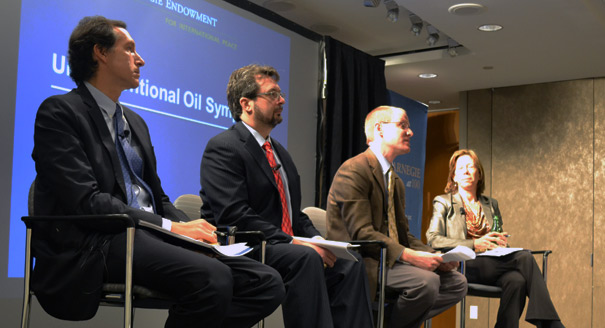
It is important to confront complexity on the diverse array of 21st century oils and their impacts on climate change.
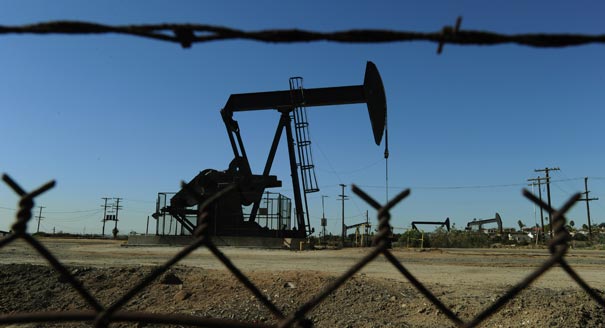
The array of emerging unconventional oils driven by the investment in new technologies is diverse in terms of resource geographies, make-ups, processing requirements, trade patterns, carbon emissions.
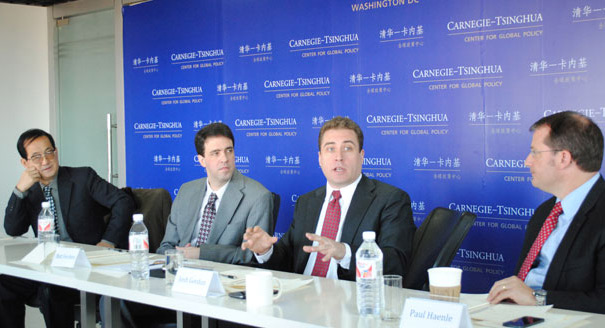
The dramatic internal changes in Myanmar have refocused attention on the dynamics between the United States and China, playing into issues of trust and mistrust among the three countries.
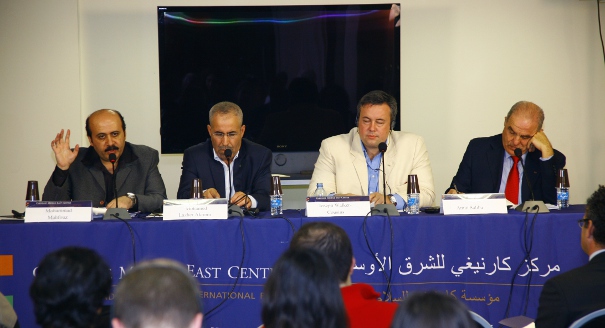
The Arab Spring has created challenges and opportunities for the Middle East. Transforming the security sector of Arab states currently in transition will be essential if democratic institutions are to thrive.
The Carnegie Middle East Center, in partnership with the Economic and Social Commission for Western Asia, held a conference that explored the challenges and political dynamics of security sector transformation in Tunisia, Egypt, Iraq, Libya, and Lebanon.
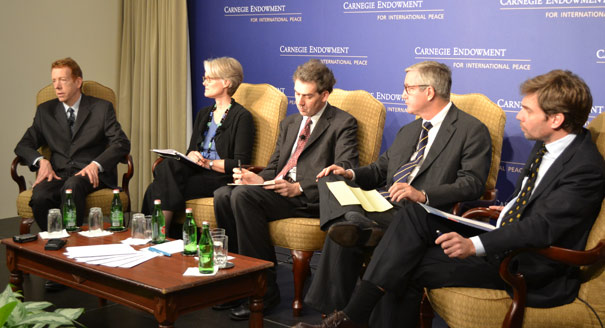
Recent events in the post-Soviet European neighborhood have again put the spotlight on struggling efforts for democratization in the region.
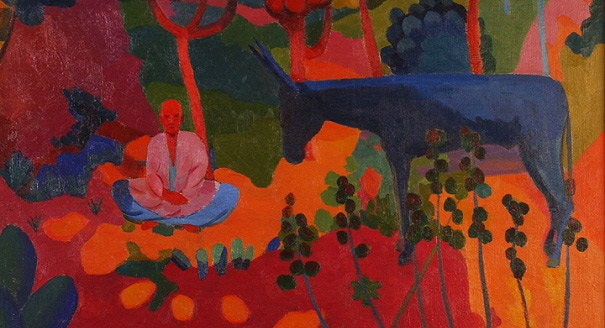
“The Desert of Forbidden Art” tells the incredible story of how a treasure trove of banned Soviet art worth millions of dollars was stashed in a far-off desert of Uzbekistan.
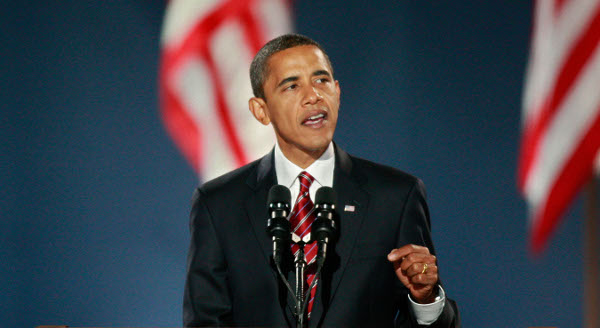
Join us for an in-depth conversation between Admiral Mike Mullen and Carnegie’s Jessica T. Mathews as they discuss the foreign policy landscape confronting the president in 2013.
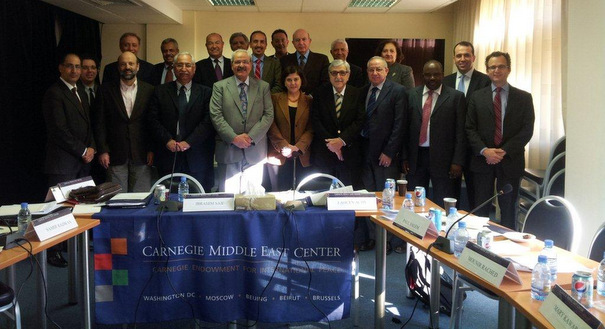
The Arab Spring has paved the way for fundamental economic and political change. Old and discredited economic models have marginalized entire communities, and the failure to achieve desired growth has left the majority of the region’s inhabitants stuck in poverty.
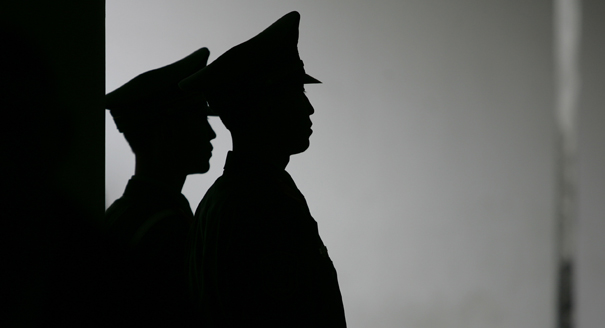
The Obama administration argues that the realignment of American military might and political focus is not meant to counter a more assertive China, but to refresh relationships with allies and to maintain regional stability.