Carnegie Moscow Center

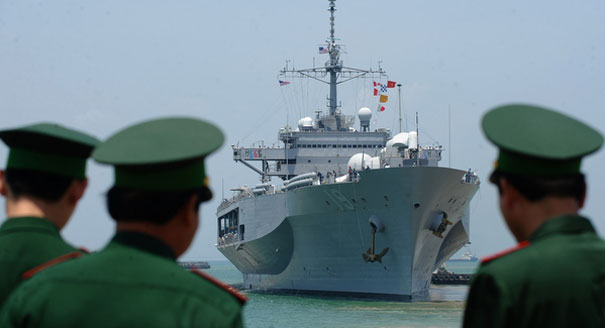
Recent ratcheting up of rhetoric between China and the Philippines highlight the complexity and intensity of maritime disputes.
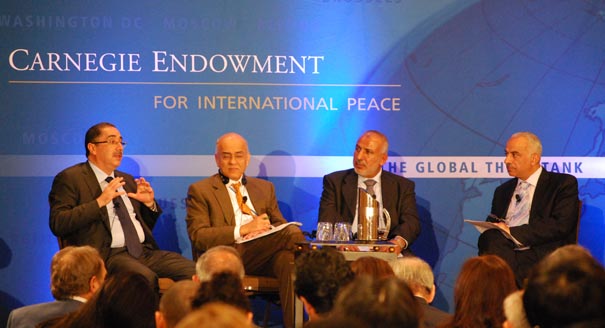
As Islamist parties gain power in the Middle East, they must formulate short- and long-term plans to address the present economic crisis and determine the roles of the state, private sector, and international finance institutions in promoting economic development.
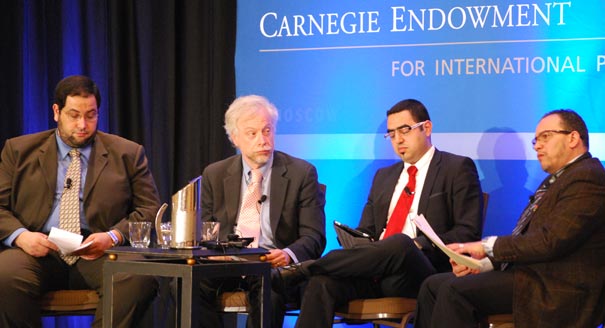
In the wake of the Arab Spring, new governments are struggling to determine how constitutions can be drafted to have maximum support and act as an instrument of reconciliation, and how to define the place of Islam and sharia in the new system.
It is clear that Islamist parties will have a dominant impact on the outcome of Arab transitions, but there needs to be a clearer understanding in Washington of what that will mean for governing.
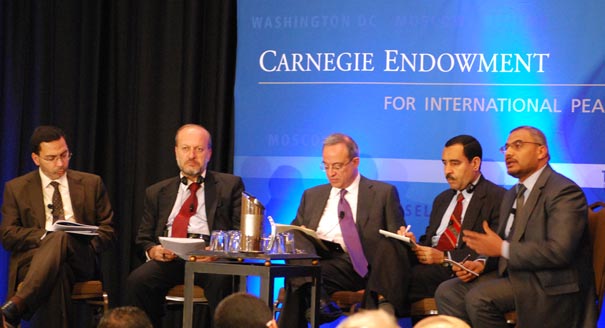
Following the Arab Spring, Islamist parties in the Arab world face major political challenges in building new regimes.
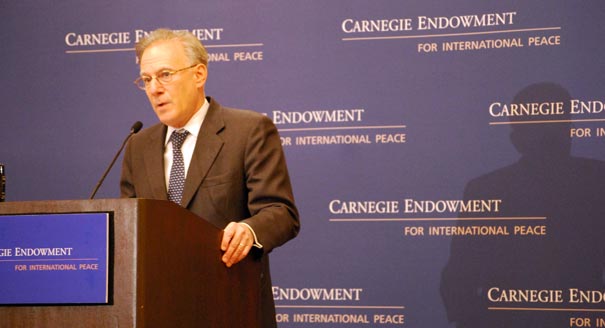
Washington Post columnist David Ignatius spoke on President Obama’s Middle East policy and response to the Arab Awakening.
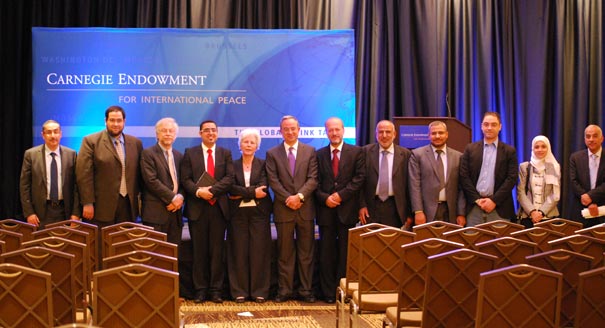
Islamist parties will have a dominant impact on the outcome of Arab transitions, but there is little understanding in Washington of what that will mean for governing.
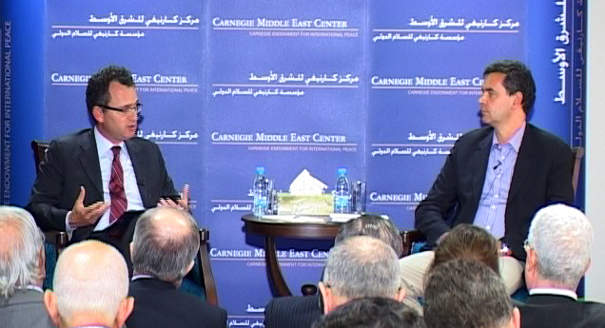
With democratic change struggling to take root in the Arab world, it remains to be seen whether Turkey can serve as a model for those who hope to usher the region through the difficult transition to a more democratic order.
The Yanukovych regime, like previous Ukrainian administrations, has yet to implement the comprehensive reform agenda needed to eliminate corruption and spur economic growth.
Some forecasting models predict that incumbent U.S. President Barack Obama has a good chance of winning the November 2012 presidential election, while other methods predict his defeat.