Carnegie Moscow Center


At a time of uncertainty and change in the South Caucasus, Armenia must find a way to resolve the Nagorny-Karabakh conflict and normalize its relations with Turkey.
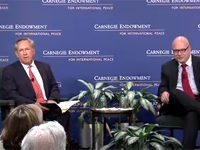
Twenty years after the end of the Soviet Union, Moscow should drop the notion of creating an exclusive power center in the post-Soviet space.
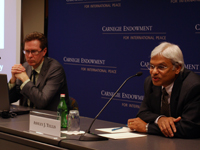
Strategic mistrust between China and India has worsened in recent years, prompting concerns that the world’s two most populous states are doomed to rivalry as their power and interests expand.
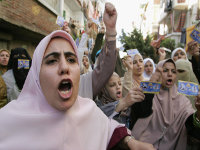
Given that gender equality is a driver of development, understanding how politics, economy, and business can both benefit from and support equality between women and men is of crucial importance.
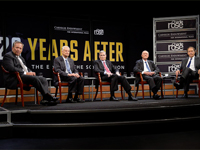
The Carnegie Endowment hosted a special taping of the Charlie Rose Show, on the situation twenty years after the end of the Soviet Union.
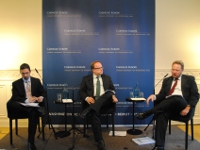
The European Commission’s newly released White Paper on Energy outlines a strategy that calls for an increased, consolidated role for Brussels to resolve tensions on energy supply security.
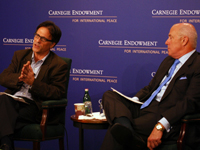
It is widely acknowledged that China must transform its growth model toward one more reliant on domestic consumption, and policy makers are warning that growth rates will slow sharply in the coming years to perhaps six to eight percent.

Since 2002, when the Justice and Development Party came to power in Turkey, domestic and international observers have found the party’s policies ambiguous at best, and they have questioned the country’s development path and the direction of Turkey’s foreign policy.
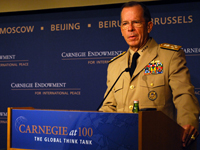
During four years as Chairman of the Joint Chiefs of Staff, Admiral Mike Mullen has presided over two wars in Iraq and Afghanistan, a period of historic change in the Middle East, and the capture of Osama bin Laden.
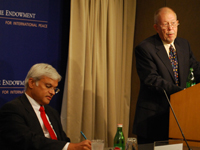
Pakistan―a nation founded as a homeland for South Asian Muslims, most of whom follow a tolerant and nonthreatening form of Islam―has become a haven for al-Qaeda and domestic jihadist and sectarian groups.