Carnegie Moscow Center

Many observers feel that the nuclear order is breaking down or failing to keep up with technological developments and the emergence of new powers. What alternatives are there for strengthening nuclear governance?
Western media reporting often obscures a more nuanced understanding of the complexity of Pakistani society and the factors which are likely to shape a positive and stable future for the country.
What steps, and by which actors, are necessary to enable a successful conference on the establishment of a Middle East Weapons of Mass Destruction Free Zone?

Should the U.S. impose limitations on fuel cycle activities when negotiating new bilateral nuclear cooperation agreements?
The U.S., Russia, and China drive each other’s nuclear requirements. China and Pakistan drive India’s nuclear requirements, and India’s capabilities, now augmented by U.S. and other foreign assistance, play back on Pakistan and China.

In the 20th century, extended deterrence helped prevent proliferation, but in the 21st century, will it impede nonproliferation and disarmament?
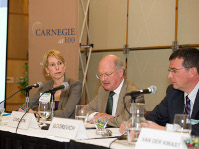
The Nuclear Suppliers Group, the world's most comprehensive nuclear trade rule-making organization, faces a number of challenging decisions.

Lorem ipsum dolor sit amet, consectetur adipisicing elit, sed do eiusmod tempor incididunt ut labore et dolore magna aliqua. Ut enim ad minim veniam, quis nostrud exercitation ullamco laboris nisi ut aliquip ex ea commodo consequat.
The 2011 conference focused on new actors and new agendas, reflecting the need to develop cooperative responses to challenges being posed by changing technology, distributions of political power, interest in nuclear energy, and security conditions in key regions.
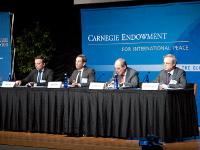
The Iran case shows how lacunae in nonproliferation rules regarding the definition of peaceful uses of atomic energy and the fulfillment of peaceful nuclear cooperation can complicate efforts to enforce compliance in a rule-based system.