Carnegie Moscow Center

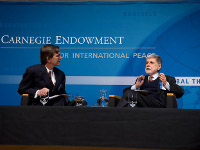
Ambassador Celso Amorim explores how the nuclear nonproliferation regime fits into the broader dynamic of international relations.
Is the Japan nuclear disaster site-specific or does it have broader implications for the credibility and viability of nuclear energy worldwide?
Do the United States and Russia have unique deterrence requirements, or can other nuclear-armed sates provide a model for them?

The spread of nuclear power to new states highlights the importance of corporate responsibility within the nuclear industry in facilitating adherence to global standards of nuclear safety, security, and nonproliferation.
What are the prospects for Comprehensive Test Ban Treaty ratification in the United States and other countries required for the treaty to enter into force?

How should the International Atomic Energy Agency manage the growing safeguards workload?

What fuel cycle technologies will dominate the commercial nuclear world a generation from now?
India and Pakistan nearly went to war in 2001-2002 and faced another crisis after the 2008 attacks in Mumbai, India. What steps can be taken to prevent nuclear escalation in South Asia?
The Nagorny Karabakh conflict remains a source of potential instability for the South Caucasus region and for neighboring countries. Lessons learned from the history of the Karabakh peace process can be applied to today's dialogue.
As worries about China’s economy overheating escalate, Chinese policy makers are focusing on domestic rebalancing and placing an increased priority on increasing domestic consumption and developing less urbanized regions.