Carnegie Moscow Center

Strengthening regional cooperation in Central Asia is one of the most powerful ways to foster development and would enable the states of the region to better meet the daunting individual and collective challenges they face.
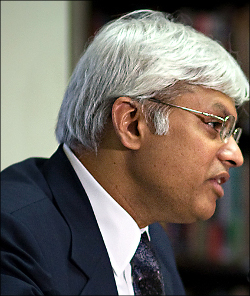
Ashley J. Tellis shared his insight on the war in Afghanistan in London. He argued that the United States now faces three possible options concerning future strategy for Afghanistan.
Relations between India and the U.S. have improved in recent years, thanks in part to a “building block” approach that aims to build trust from the bottom-up. Carnegie hosted Ambassador David Mulford to discuss this relationship.
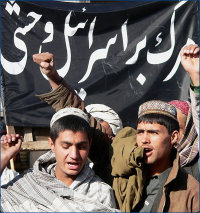
Sarah Chayes emphasized that it is of the utmost importance to understand the complex nature of the Afghan people, as well as the infrastructural realities on the ground.
Arab League secretary-general Amr Moussa expressed hope that the Obama administration is committed to solving the Palestinian-Israeli conflict and called on it to pressure Israel to halt settlements in the Palestinian territories and to formally back a two-state solution.
New European Union members are having a mixed influence on European democracy assistance policies and instruments, with little role in the reform of the European Initiative for Democracy and Human Rights, but an instrumental one in the creation of the European Partnership for Democracy.
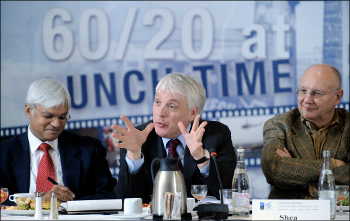
At a lunch debate co-hosted with the NATO Public Diplomacy Division, Jamie Shea and Ashley J. Tellis discussed new, emerging security risks and provided an outlook on how and if NATO should respond.
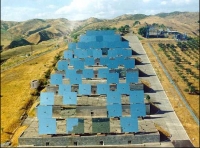
Uzbekistan has the potential to become a leading player in renewable energy production and innovation, but only if its government provides incentives to make the price of renewables more competitive in the marketplace.

The United States must recognize that former Soviet states are and will continue to be an important focus of Russia’s foreign policy, and should take a broader regional view to its relationships with countries in Russia's sphere of influence.
Italy's Minister for Foreign Affairs, Franco Frattini, outlined the priorities of the G8 under the Italian Presidency, arguing that there is a need for a review of international structures.