Carnegie Moscow Center

International governance assistance has evolved steadily since rising to prominence in the mid-1990s, but donors still face major challenges in designing, implementing, and evaluating effective governance programs.
Diplomatic relations between Japan and China are still impeded by painful memories of Japan’s colonization of parts of China and by current tensions over the role of the United States in the region.
Putin’s political centralization, a declining economy, and an increasing popular skepticism leaves large questions surrounding Russia’s future direction.

A post-Cold War Russian and Euro-Atlantic strategic partnership must be balanced with a well structured and long term Sino-Russian relationship.

The U.S-Russia relationship suffers from unanswered questions, unresolved statuses, and unsatisfied interests.
The EU's Eastern Neighborhood policy is unrealistic in the face of Russian pragmatism and the neighborhood’s immediate concerns.

The EU-Russia energy roadmap for 2050 identifies key areas of cooperation. However, Russian business practice and larger geopolitics threaten the basis of EU-Russia energy relations.
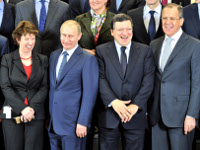
Reform should be balanced with stability for the EU-Russia relationship to continue developing a deeper commitment in the coming years.

Within a generation, developing countries will likely account for six of the world’s seven largest economies and dominate world trade. How will this affect international relations and governance in the context of globalization?

Too often, debate on the relationship between Europe and Russia is driven by events—including elections, changes in leadership, and summits—which may provide important policy openings but do not always allow for thoughtful consideration of the long-term factors that shape the relationship.