Carnegie Moscow Center


Despite the increasing multilateralism of nuclear dynamics, analyses often remain confined to the bilateral or trilateral level. Nowhere is this more evident than in discussions of strategic stability.

Only a few months after the demise of Ben Ali, Carnegie's Lahcen Achy and Tunisian economists organized a conference in Tunis to discuss challenges and perspectives for Tunisia to achieve its democratic transition and enhance socioeconomic development.
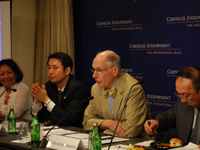
The cross-strait Economic Cooperation Framework Agreement is a step forward in regional economic integration in the Asia-Pacific.
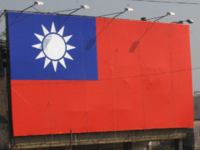
As 2012 approaches, both Taiwan and the United States face presidential elections and Chinese President Hu Jintao will step down from his position as general secretary, creating some questions about the future state of U.S.-Taiwan-China relations.
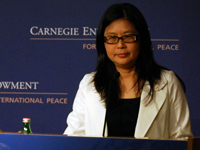
Although the last three years have seen close cross-strait interaction and cooperation bring peace and stability to the Taiwan Strait, there are still many difficult challenges that need to be faced.
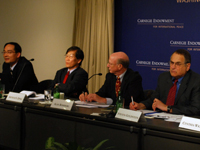
Upcoming elections and power transitions in Taipei, Beijing, and Washington, coupled with looming uncertainty in economic and political ties, pose potential challenges to cross-strait relations.
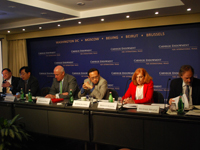
Fears of abandonment by the United States are growing in Taiwan, although U.S. scholars doubt the validity of these concerns.
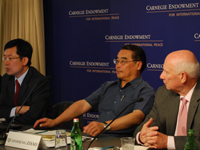
Beijing faces many domestic challenges, ranging from inflation to nationalism to popular unrest. Such issues are likely to take precedence over cross-strait relations in the minds of Mainland China's leaders.

Print and online media play a central and under-analyzed importance in shaping Sino-Indian mutual perceptions. Media stories often take on a life of their own, at times provoking a diplomatic or even military response.
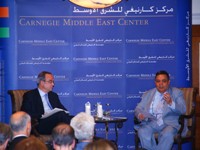
As the crisis in Libya continues, it is important to figure out how to put an end to the four-month conflict and to agree on a road map for the reconstruction of the ravaged country.