Carnegie Moscow Center


A distinguished group of experts from thirteen countries explore how to overcome obstacles to nuclear disarmament and pose questions that require further official and nongovernmental deliberation.
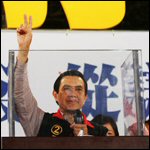
An assessment of the degree to which Washington and Beijing are willing or able to implement crisis management principles like maintaining direct channels of communication and preserving military flexibility.

Eastern European and Baltic countries that have recently joined NATO and the European Union have undergone social and economic reforms, but they have also faced significant challenges along the way. Can their experience be of use to Russia?
This chapter examines how world public opinion influences the United States' ability to exercise influence abroad militarily, economically, and politically. It concludes by discussing the difference between opposition to American foreign policy, on the one hand, and anti-Americanism, on the other hand, and exploring that difference's policy implications.

This volume looks at the major strategic choices facing the U.S. policy community and, through a combination of country, regional, and topical studies, analyzes the impact of U.S. policy and geopolitical developments on Asia’s transformation over the past eight years.
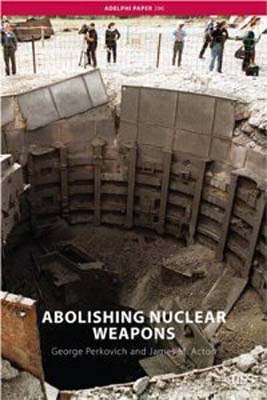
In this new Adelphi Paper published by the International Institute for Strategic Studies (IISS), George Perkovich and James M. Acton examine the challenges that exist to abolishing nuclear weapons completely, and suggest what can be done now to start overcoming them.

China’s capitalist revolution presents two divergent political paths for the country: autocracy or democracy. While the current strength of the CCP might suggest China is traveling down the first path, there are signs that citizen resistance on issues like growing economic disparities and environmental degradation may be on the rise and become more potent in the future.
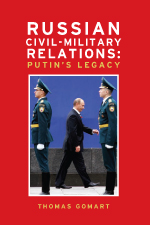
Russian Civil-Military Relations provides crucial analysis of the nature and evolution of the balance between civilian and military institutions. These relations will continue to influence regime development, security policy, and societal attitudes that build from Putin’s Russia, to Medvedev’s administration, and into the future.
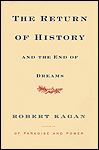
The world remains “unipolar,” but international competition among the United States, Russia, China, Europe, Japan, India, and Iran raise new threats of regional conflict. Communism is dead, but a new contest between western liberalism and the great eastern autocracies of Russia and China has reinjected ideology into geopolitics.
Jeffrey Sachs's new book is the author's blueprint for how global society should solve mankind's most pressing problems: climate change, shortage of water, excessive population growth (compared to energy and food capacity of the Earth), diseases (including AIDS), poverty and U.S. foreign policy. The way to solve them is through international co-operation, led by the rich countries.