Carnegie Moscow Center

The liberalizing Indian economic reforms of the 1990s and early 2000s led to a significant shift in the growth rate and poverty reduction in India. But India has paid a heavy price for abandoning that path in 2004.
Could a potential nuclear deal strengthen the country’s civil society and private sector and bring about meaningful political reform?
The world seems to be on fire—the spread of the Islamic State, the endurance of Boko Haram, the East-West standoff in Ukraine. Is corruption the thread tying these events together?
After years of complex negotiations, the United States and South Korea have concluded a new nuclear cooperation accord.
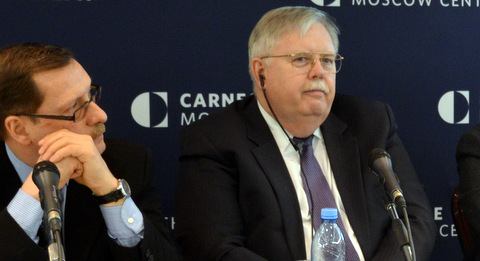
As the U.S. and Russia face the tensions today on a number of issues, it’s really valuable to discuss the legacy of Torgau and the Allied victory over Nazi Germany.
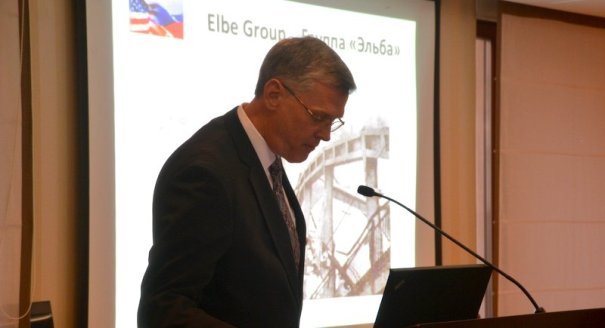
For the next 70 years, the U.S.-Russian relationship has been like that day in Torgau: sometimes shooting at each other, sometimes taking the risk to climb out on a broken bridge and link up.
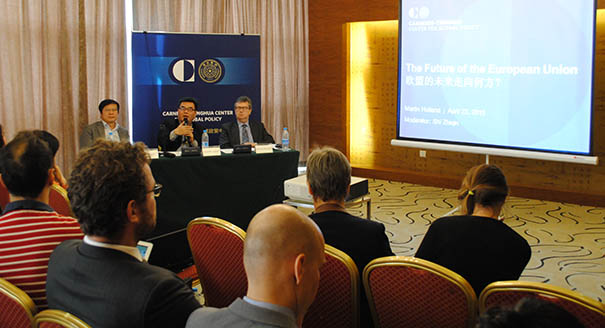
Populist movements and ongoing crises in Ukraine and Greece reveal a lack of policy consensus among EU members as they consider the union’s prospects for the future.
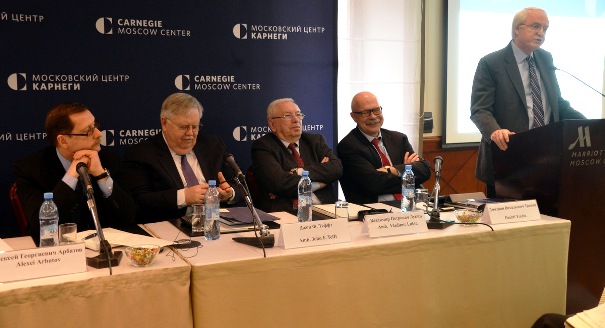
The Carnegie Moscow Center organized a conference to discuss the experience of Russian-American alliance during the Second World War, as well as the experience of cooperation and rivalry after the end of the Cold War.
Islamabad’s efforts to combat terrorism are vital for both domestic security and regional stability.
As the conflict between Libya’s political factions drags on, its humanitarian and economic crisis deepens. Meanwhile, the Islamic State is exploiting the vacuum wrought by the fighting and the absence of coherent, capable institutions.