Carnegie Moscow Center

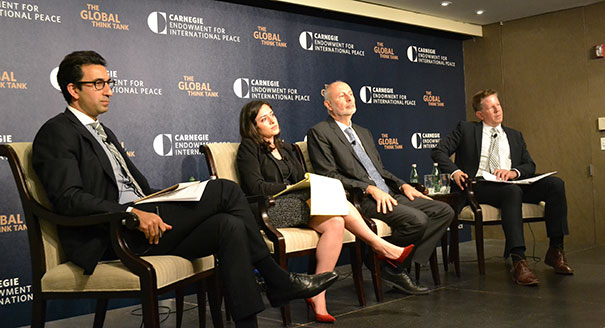
It remains to be seen whether the Iran nuclear deal will encourage Tehran to pursue a more aggressive foreign policy in the Middle East, with potentially significant regional consequences.
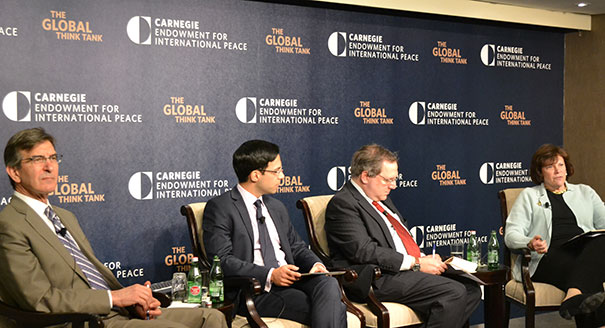
In this panel, the participants discussed the technical aspects of the framework deal that was signed in the beginning of April.
Oil is changing. The oils themselves, how they are extracted and processed, and the products into which they are made are shifting in substantial ways.
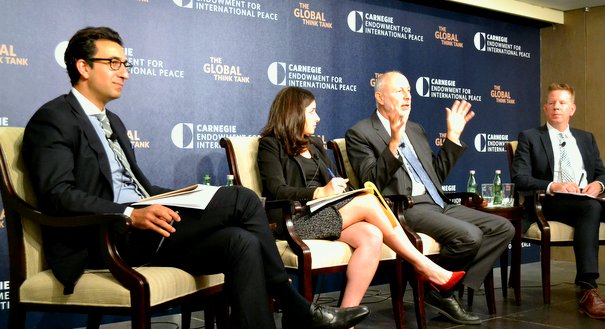
What are the short and long-term obstacles to finalizing and sustaining a nuclear deal with Iran, and how would a U.S.-Iran nuclear détente impact ongoing conflicts and long-standing alliances in the Middle East?
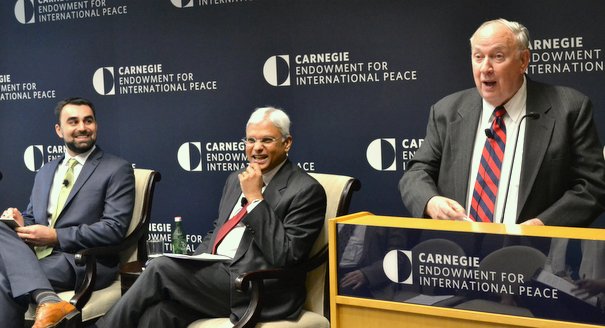
As India and Pakistan develop their naval nuclear forces, some experts fear a potentially volatile maritime environment in the Indian Ocean.
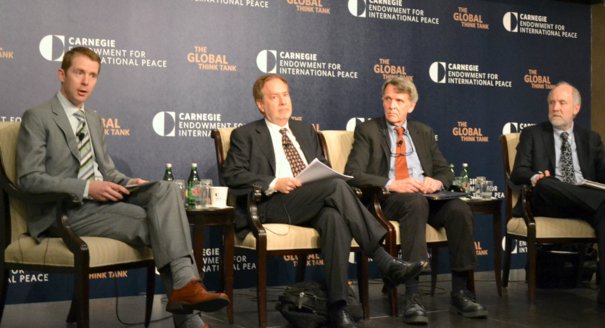
For almost two decades, the United States and South Africa have struggled over its handling of the highly enriched uranium that remained after the closure of South Africa’s bomb program.
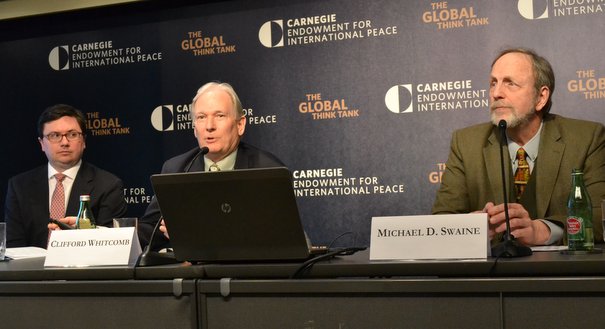
The Asia-Pacific region is undergoing a dynamic process of change, from patterns of military and economic power to social and political behavior.
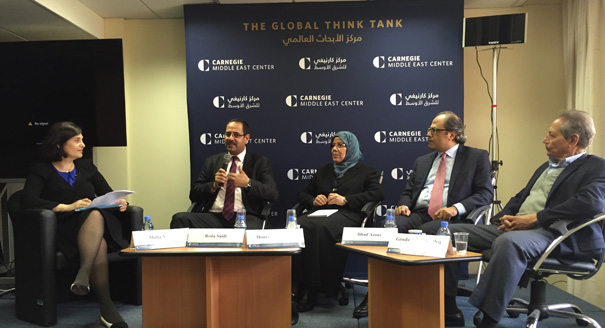
The popular movements that swept through the Arab world in the past four years have sparked widespread debates on what it means to be a citizen in the region.
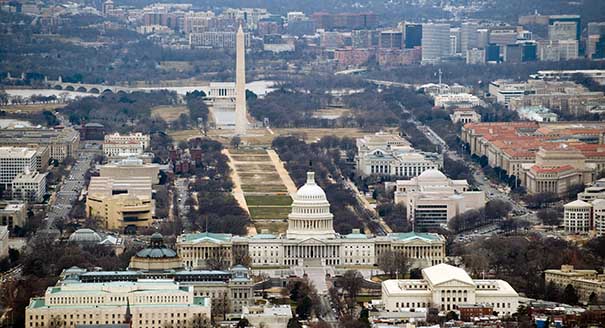
Globalization and economic integration are enhancing the influence that stakeholders from Asian countries have in Washington DC.
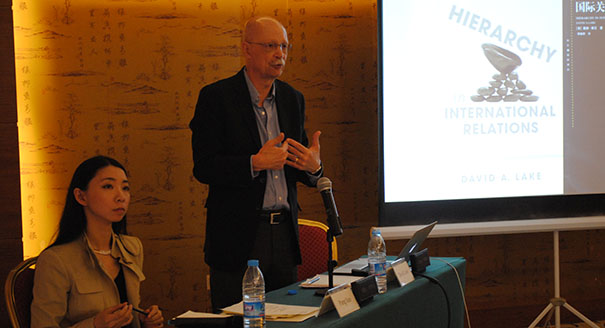
China’s dramatic rise is reshaping the global order and prompting countries both large and small to reassess how they interact with one another.