Carnegie Moscow Center

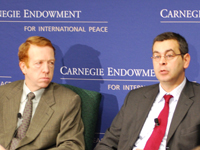
Turkey has a potentially valuable role to play in supporting democracy and state-building in the Arab world, but questions about that role abound.
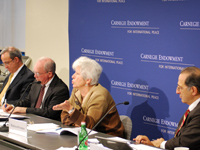
Zogby Research Services conducted polling in eight countries across the Middle East and North Africa, as well as in the United States, to look at public opinion on the U.S. withdrawal from Iraq, the Arab Spring, and other recent developments in the region.
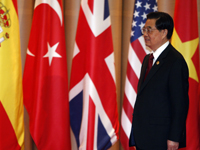
The changing international environment shapes and influences Chinese diplomatic practices.
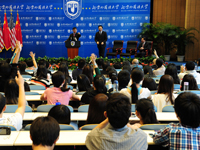
The transformation of Chinese diplomacy over recent years has become the focus of world attention. Chinese academia has followed accordingly as China’s top universities initiate a significant series of reforms in the study of Foreign Affairs.
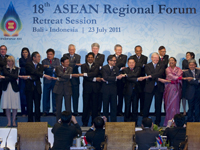
With its growing global influence, China has reached a strategic turning point. Beijing must decide if it wants to continue a low-profile path of non-interference or if it should be more assertive and take a greater stake in world affairs.
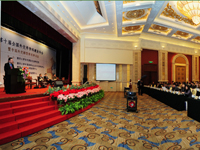
China’s traditional diplomacy is at a crossroads as it adjusts to the new global order. The financial crises, climate change, and regional instability have propelled China into a new global role and in turn, a new era of diplomacy.
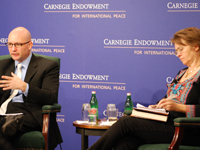
The Pakistani militant group Lashkar-e-Taiba has developed from a small resistance group to the most feared militant organization in South Asia and one with global reach.
Recently, China announced that it is considering an offer by the Seychelles to use its ports for resupplying naval vessels. Meanwhile, India is believed to be planning a cooperative effort with Vietnam on oil and gas exploration in the South China Sea.
The Nuclear Suppliers Group, which is responsible for establishing guidelines that govern the transfer of nuclear-related materials, equipment, and technology, faces a number of serious challenges.
Twenty years after the end of the Soviet Union, Russia has no choice but to reinvent itself as a global player and as part of a wider community.