Carnegie Moscow Center

While there were high hopes for Ukraine’s speedy transition to a wealthy free market democracy and full membership in the European and Euro-Atlantic communities when it declared independence in 1991, it has fallen short of these targets.
Turkey has a potentially valuable role to play in supporting democracy and state-building in the Arab world, but big questions about that role abound.
The World Bank report examines the intersection of transport, growth, and carbon emissions, compares transport sectors in developed and developing countries, and calls for broad sector reform.
Russia’s approach to the Middle East is at a turning point, as the changes associated with the Arab Spring continue to destabilize regimes and alliances and Iran appears to be moving ahead with its nuclear program in defiance of Russia and the West.
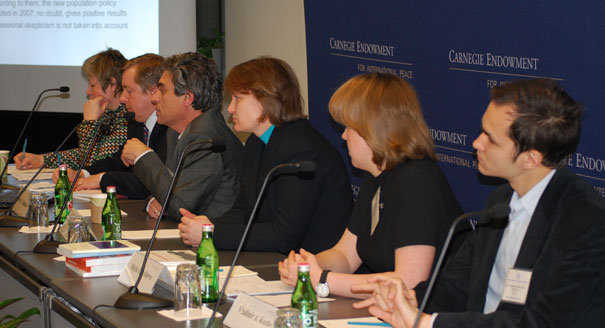
Russia has witnessed an unsettling trend of long-term population decline since the mid-1990s, with alarming mortality rate statistics, falling fertility rates, and waves of emigration draining the nation of its best and brightest.
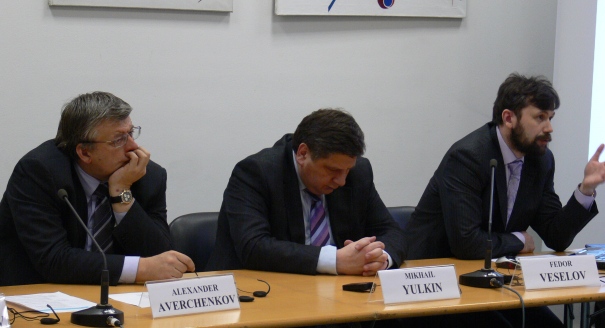
Russia has pulled out of quantitative commitments to reduce its greenhouse gas emissions. However, as one of the world’s most energy-intensive economies, Russia has a potentially significant role to play in reducing climate change.
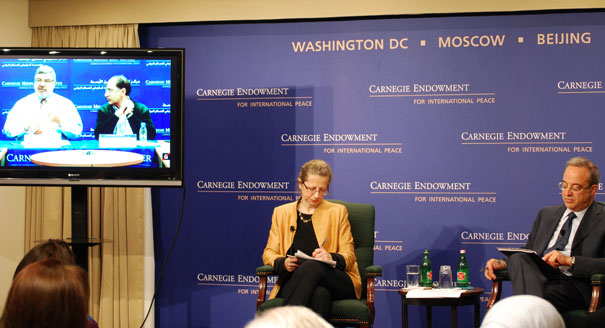
As the Arab Awakening continues to unfold, the region’s future will hinge on whether greater political freedoms in countries like Tunisia, Egypt, and Libya can be harnessed to produce innovation, economic growth, and a true knowledge economy.
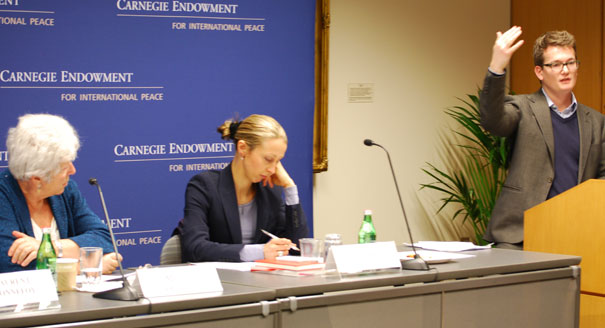
The Salafi movement in Yemen has historically been mostly apolitical, but the 2011 uprising has deeply transformed the Islamist camp.
While it has been known since early 2004 that the illicit proliferation network headed by A.Q. Khan of Pakistan supplied the nuclear programs of Iran, North Korea, and Libya, certain questions have not yet been resolved.
Nearly a year after the fall of Egypt's long-time dictator, the country’s military remains in control but has promised to transfer power by July.