Carnegie Moscow Center

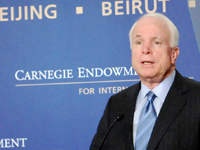
A strong U.S.-Indian partnership can play an important role in addressing the many challenges faced by both countries and stabilizing South Asia and the international community.

With its simmering conflicts and economic problems, the South Caucasus poses perhaps the biggest challenge to the European community in its neighborhood.
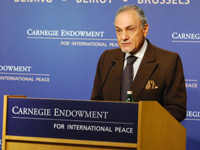
His Royal Highness Prince Turki Al-Faisal discussed the current state of the Middle East peace process and the Saudi-U.S. relationship.
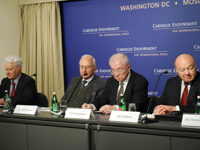
The ability of the United States and Russia to cooperate on matters of global importance could affect a wide range of important issues from arms control to climate change.

In spite of the fact that nuclear reprocessing continues to pose a number of economic and nonproliferation challenges, this process remains a significant factor in the current and future nuclear power plans of a number of nations
The U.S. midterm elections have the potential to change the face of U.S. domestic and foreign policy and to affect U.S.-China relations.

In November, NATO will meet in Lisbon to craft a new Strategic Concept and address the future of its nuclear posture, which has caused controversial debate in recent months both within the Alliance and externally.
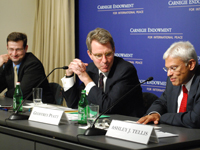
A strong U.S.-Indian partnership is in the strategic interest of both nations and President Obama’s upcoming visit to India provides an opportunity for both sides to reinvigorate a critical global collaboration.

The United States must consider whether its counterinsurgency strategy in Afghanistan is working and determine the best way to build the Afghan National Security Force and develop the country’s governance and political institutions.

China and India today represent the world’s two largest and fastest-growing economies, yet even as the two countries increasingly collaborate in regional and global fora, they are experiencing frequent and sustained tensions.