Carnegie Moscow Center


While Kyrgyzstan's newly elected parliament has convened its first session, there is still no ruling coalition and the situation in the country remains unpredictable.
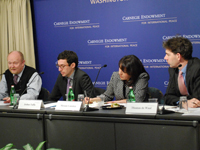
The North Caucasus have been marked recently by renewed instability and violence and Russian officials have publicly acknowledged that the region poses a serious problem for their country.
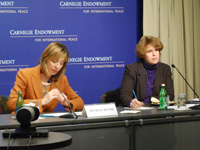
As voters prepare to head to the polls for parliamentary elections on November 28, the Egyptian government has tightened restrictions on independent media and civil society and has already disqualified one-quarter of the Muslim Brotherhood's candidates.

With Russia engaged in an effort to develop a secure sense of its own national identity, the West must initiate constructive discussions with Moscow to build up the trust necessary for cooperation and coexistence.

Based on the Obama Administration’s April Nuclear Posture Review, conventional weapons are poised to gain a more prominent role in the U.S. deterrence posture, with implications for extended deterrence, arms control, and U.S. strategic stability.
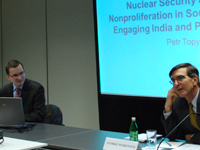
Given the current status of nuclear security and nonproliferation in South Asia, nuclear powers like China, Russia, and the United States should look for a path of engagement for India and Pakistan to be brought into the global nonproliferation regime.

Despite democratic reforms, a volatile political environment and an unsustainable economy continue to threaten Georgia's stability.
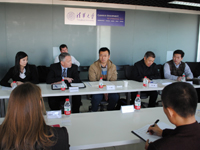
Ever since China severed defense exchanges with the United States in January 2010 to protest U.S. arms sales to Taiwan, the future of China-U.S. security relations has assumed heightened importance.
With the peace process halted and little hope for reinitiating direct talks, Palestinians are discussing the possibility of formulating an alternative strategy for achieving statehood.

The United States, Europe, and Russia are entering a critical phase that will define relations among them for years to come and, by extension, the future security order in Europe.