Carnegie Moscow Center

Russia’s current ruling elite understands the threat posed by an ethnic project of nation-building and, therefore, seeks to adhere to a supranational concept of Russia as a civilization.
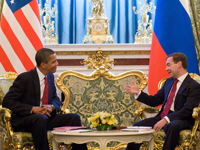
The administration of President Barack Obama sees the repair of the U.S. relationship with Russia as a major foreign policy objective, and has spent its first year ambitiously attempting to reset relations and place them on a more positive footing.

In 20 years of religious freedom, the Russian Orthodox Church has been unable to create a workable system for preparing its clergy and lay workers to perform social service, including missionary work, charity and moral education at schools and universities.
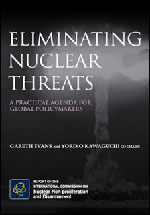
The International Commission on Nuclear Non-proliferation and Disarmament recommends practical policymaking options designed to galvanize action by governments to achieve progress on nuclear nonproliferation and disarmament, including positive outcomes at the 2010 Nuclear Non-Proliferation Treaty Review Conference.
The most crucial areas for U.S.-Russia relations in 2010 include cooperation on Afghanistan and Iran, future developments in Georgia and Ukraine, and discussions of a new European security system inclusive of Russia.

President Obama conducted a four-nation tour of Asia from November 12-19, which incorporated visits to Japan, China, Singapore and South Korea. The tour reflected the increasing significance of the region, and particularly China, for U.S. foreign policy.
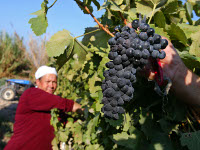
Food security is fast becoming a critical issue for Persian Gulf countries as they face three converging factors: tighter global food markets with strained export surpluses, a decline in domestic production, and continuous population growth.
In a special live broadcast of the BBC’s prestigious The World Tonight, leading foreign policy experts assess President Obama's first year in office and the chief challenges that lie ahead: strengthening the nonproliferation regime, climate change, the Israeli–Palestinian conflict, Iran, and Afghanistan.
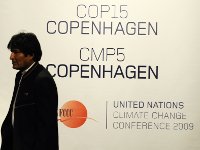
With governments, academics, and NGOs still digesting the results of the Copenhagen Summit, Washington’s senior G20 diplomats agreed that while progress had been made in Copenhagen, significant work remained to be done.
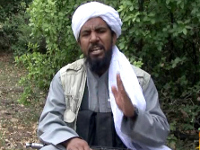
Over the past eight years, al-Qaeda has experienced a metamorphosis. The man now poised to succeed Osama bin Laden, and the embodiment of the “New Al-Qaeda Man,” is Shaykh Abu Yahya al-Libi, who has enjoyed a meteoric rise into the senior ranks of al-Qaeda and has been integral in recalibrating al-Qaeda.