Carnegie Moscow Center

The start of the Obama administration offers new opportunities to bring the international community together around the cause of nonproliferation.
Experts discussed critical developments in these key countries and how their nuclear ambitions will affect efforts to curb the spread of nuclear appetites and weapons around the world.
Experts discussed whether nuclear power will reemerge as a major energy source both in the U.S. and internationally, and if so, what technical, political, societal, and economic policy changes are required.
If export controls and international safeguards standards are tightened, a nuclear renaissance will not necessarily increase proliferation risk.
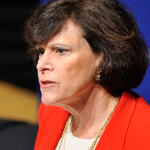
Carnegie Endowment President Dr. Jessica T. Mathews welcomes over 800 conference participants from 46 countries. She reflects on the theme of the conference and the challenges ahead.
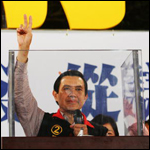
The 30-year anniversary of the Taiwan Relations Act coincides with a period of relative calm in cross-straits relations, and comes at a time when the U.S. is reassessing its policy towards Taiwan.
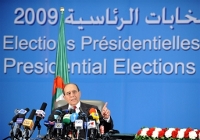
As Algerian President Bouteflika moves into his third term, he is increasingly circumventing political institutions, such as parties or parliament, by using the distribution of rent to buy loyalty.
The 2009 Carnegie International Nuclear Policy Conference brought together over 800 experts and officials from more than 45 countries and international organizations to discuss emerging trends in nuclear nonproliferation, strategic stability, deterrence, disarmament, and nuclear energy.

Reforming the Russian court system requires transforming it into a more independent and transparent branch of government.

Gilles Dorronsoro argued at RUSI that the allied forces should focus on securing strategic areas in Afghanistan rather than on further military commitments.