Carnegie Moscow Center


States will not abolish nuclear weapons if they are not highly confident that everyone will comply with key disarmament agreements and nonproliferation rules.

Experts examined the lessons learned from several existing NWFZs and assessed the prospects for and potential benefits of additional zones.

Experts considered the nexus between space and nuclear issues, particularly the implications of space warfare capabilities on nuclear force postures.

Experts discussed what are reasonable expectations for what can be accomplished before and during the 2010 NPT Review Conference.
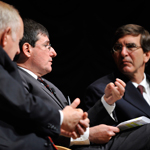
An exploration of the key questions arising from the Congressional Commission on the Strategic Posture of the United States and the new Carnegie book, Abolishing Nuclear Weapons: A Debate.

Deputy Secretary of State James B. Steinberg called for greater U.S. action toward nuclear disarmament and control of nuclear materials.

Experts outlined some of the important innovations that must be included in any strategy to make the nonproliferation regime capable of containing the proliferation of nuclear weapons.
The U.S.-China strategic relationship is entering a period of new dynamism and uncertainty, as China builds up and diversifies its nuclear "counter-deterrent" and as the United States builds down its nuclear forces.
North Korea’s nuclear test, China’s rising power, Russia’s assertiveness, Iran’s unceasing uranium enrichment, and American interest in nuclear disarmament have renewed U.S. allies’ attachments to extended deterrence.

Experts discuss what common ground on verification is emerging, what disputes appear likely, and if a new relationship can be forged between intelligence gathering and verification regimes.