Carnegie Moscow Center

Carnegie President Jessica T. Mathews shares her thoughts on lessons learned in the five years since the invasion, the debate over withdrawal, the “surge” and lack of political progress, and guiding principles for US foreign policy in the future.
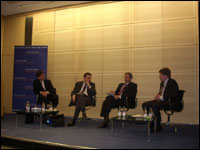
A high-level panel on Iran held in Berlin, Germany, and hosted by Carnegie Europe on March 11, 2008.
In a unique and timely new report, Carnegie's Karim Sadjadpour presents an in-depth political profile of Iranian Supreme Leader Ayatollah Ali Khamenei based on a careful reading of three decades of his writings and speeches. Sadjadpour argues that Iran's Islamic government is more powerful than it has been ever been vis-à-vis the United States.
Carnegie's Karim Sadjadpour and other Iran experts comment on Iran’s upcoming parliamentary election.
Video
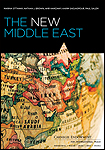
Confrontational U.S. policy that tried to create a “New Middle East,” but ignored the realities of the region has instead exacerbated existing conflicts and created new problems.
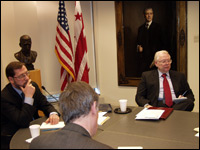
Alexei Arbatov, scholar-in-residence at the Carnegie Moscow Center, gave a talk on the Putin legacy and the likely trajectory of his successor, Dmitry Medvedev. Ambassador James F. Collins, director of the Russia and Eurasia Program, moderated the event.
To help reinvigorate a consensus between nuclear weapon states and non-nuclear weapon states about the importance of upholding current Nuclear Non-Proliferation Treaty (NPT) obligations.

On February 22, Carnegie Moscow Center Scholar-in-Residence Nikolai Petrov discussed Russia's March 2 presidential elections, which are widely expected to usher in the rule of Dmitry Medvedev, President Putin's favored successor.
Features event Video

The Carnegie Endowment hosted a discussion with Edward Gresser on his new book, Freedom from Want: American Liberalism and the Global Economy, on February 15, 2008. In this book, Gresser argues that American trade policies of the last sixty years have achieved many of the goals envisioned by their liberal founders. But he also points out that those trade policies bear embarrasing gaps.
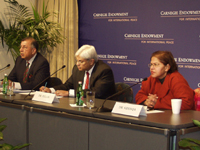
On February 13, the Carnegie South Asia Program explored the Pakistani military’s possible reactions to various post-election scenarios.