Carnegie Moscow Center

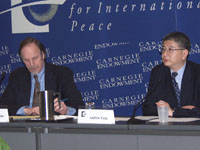
Andrew Yang, secretary general of the Chinese Council of Advanced Policy Studies, discussed the history of cross-Strait relations in the ten years since the missile crisis, and argued that Taiwan and China must co-develop a mutually acceptable peace and stability framework to manage the security situation in the Taiwan Strait.
The Democracy and Rule of Law Project hosted a roundtable discussion with Hisham Kassem about the political developments in Egypt over the last year.
Discussants evaluate models for trade capacity building in Sub-Saharan Africa.
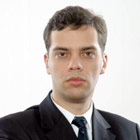
Vladimir Milov, of the Institute for Energy Policy, discussed the future of Russian oil and gas.
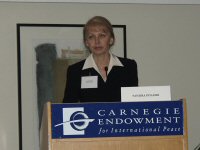
Sandra Polaski presented the striking results of Winners and Losers, Carnegie's new economic model on the effect of the Doha Round of WTO negotiations on developing countries.
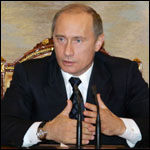
Masha Lipman, of the Carnegie Moscow Center, discussed President Vladimir Putin's strategy to neutralize the public and perpetuate his regime.
Carnegie hosted a discussion with Congressman Sander Levin on free trade agreements with Latin America.
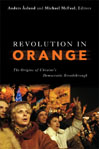
Ukraine's revolution of fall and winter 2004 brought lasting social change to the country. However, the country must still manage the Russian relationship and overcome domestic obstacles to economic and political development.
On March 8, 2006, the Carnegie Endowment for International Peace hosted a small, off-the-record dinner meeting with H.E. Roza Otunbayeva, former Minister of Foreign Affairs of the Kyrgyz Republic, entitled “Kyrgyzstan Since the ‘Revolution.’” Carnegie Senior Associate Martha Brill Olcott chaired the session.
Harvard's Elizabeth J. Perry argues that the patterns and promises of Mao's revolution continue to loom large in the beliefs and behaviors of protestors and state officials alike.