Carnegie Moscow Center

The short documentary Made in Berdsk explores regional elections in Russia and tracks the unexpected 2011 mayoral race in the Siberian town of Berdsk.
President Obama's interactions with Chinese officials during his November visit to the East Asian Summit will be part of a high visibility effort by the United States to “rebalance” its attention to Asia.
After an early phase of impressive growth, Pakistan’s economy was unable to realize its potential for improving the lives of millions of citizens, thereby contributing to the repeated crises facing the state.
With EU leaders scrambling to keep Greece afloat, rating agencies continuing to downgrade European sovereign credit, banks being pushed to the brink, and Europe likely slipping back into recession, time may be running out for the euro.
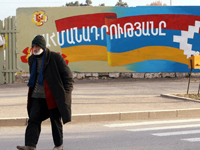
Following the failure to reach a breakthrough at the June 2011 summit in Kazan, formal negotiations between political leaders in Armenia and Azerbaijan over the Nagorny Karabakh conflict are again deadlocked.
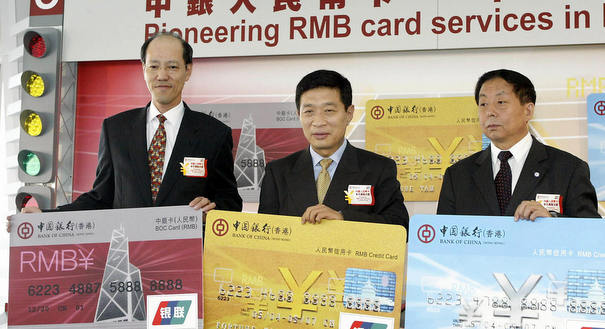
China’s economy— more importantly, its domestic consumption— is not as unbalanced as it first appears and is a result of the broader direction of the country’s economy.
South Asia’s close proximity to East Asia, combined with security interests in Afghanistan and Pakistan, place it in a geopolitically significant position for both China and the United States.
As a gas-importing country dependent on Russia, Ukraine could strengthen its energy security standing by diversifying its supplies of gas, increasing domestic gas production, and replacing natural gas with other fuels.
Standing up to the Iranian regime can be a perilous undertaking, as can be seen from the 1992 assassination of four Iranian dissidents in Berlin and from those who were lost in the mass protests following Iran's contested 2009 elections.
The ongoing revolutionary changes in Egypt have brought new Islamist actors to prominence and posed sharp questions about the constitution, the official religious establishment, and the electoral process.