Carnegie Moscow Center


Morocco has so far weathered the storm of popular unrest and regime change in the Middle East and North Africa. Questions remain, however, about whether the reforms King Mohammed VI is undertaking have the potential to alter the political landscape in Morocco.
Greenhouse Gas (GHG) emissions caused by truck transport have long been left unregulated both in the United States and the European Union, but recent U.S. measures are challenging EU lawmakers.
The key developments that come out of the G20 summit at Cannes could have a significant impact on the euro and the global economy.
The Global Adaptation Index (GaIn) was created by the Global Adaptation Institute to serve as a tool that will guide investment decisions in order to adapt to climate change.
Putin’s expected return to the presidency in early 2012 comes at a time of great economic uncertainty. Although Russia’s economy is stable at the moment, Russia will have to modernize in order to remain stable and competitive in the long run.
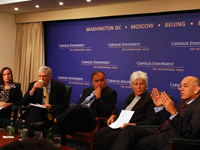
The Arab Spring has toppled three governments and galvanized change across the Middle East. But fiscal, external and labor market imbalances are widening, and both new and old governments are under pressure to deliver simultaneously on political, economic, and social fronts.
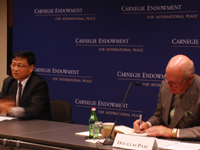
China's economic and political rise is a popular topic in international policy circles, as policymakers in the United States and abroad worry about issues ranging from questionable trade practices to an increasingly advanced military.
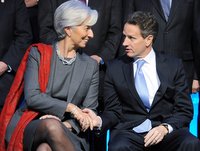
National economies are becoming increasingly interdependent and a fiscal policy made halfway across the world can have global reverberations. As a result, an understanding of the current investment climate in the United States requires an understanding of the global economic climate.
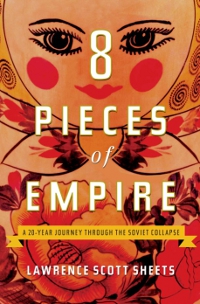
Told in eight parts, Eight Pieces of Empire follows the USSR’s disintegration and its aftermath through two decades of the author’s own reporting from the region.
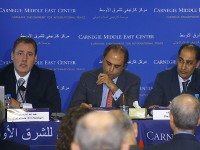
The Arab Spring is creating a power shift in the Middle East and North Africa, leading to a change in the relationship between key social, economic, and political stakeholders.