Carnegie Moscow Center

The next years will see most, if not all, of NATO's major military operations draw down as the Alliance finds itself, for the first time in twenty years, without a major operation to run.
With tighter sanctions on Iran scheduled to go into effect in the second half of this year, global oil prices could spike further, adding uncertainty to fragile global economic prospects.
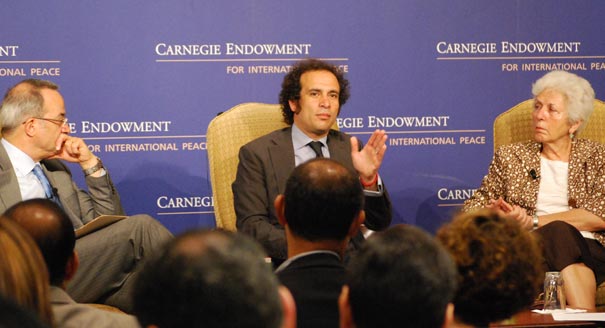
Amr Hamzawy, one of Egypt’s best known liberal members of parliament and one of the founding members of the Carnegie Middle East program, returned to Carnegie to discuss the transition in Egypt and the nature of the political process.
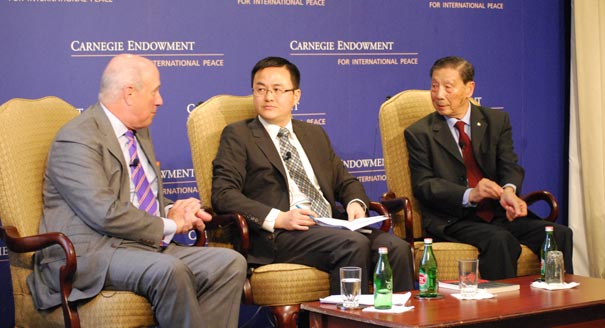
Mao Yushi, economist and founder of the Unirule Institute for Economics, discussed China’s economic development, the consequences of China’s increasing demand for energy and reliance on coal, and Sino-U.S. relations.
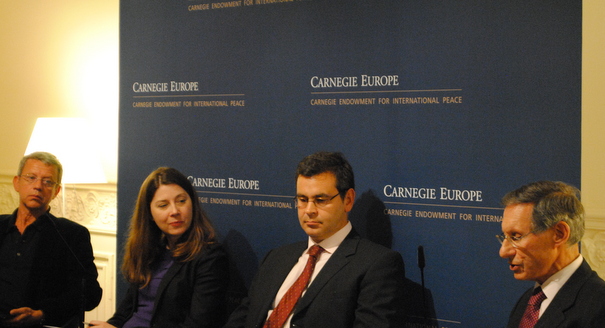
Despite widespread concern that an Iranian nuclear weapon will lead to an arms race, most nuclear-capable states have chosen not to develop a nuclear arsenal. Turkey is no exception.
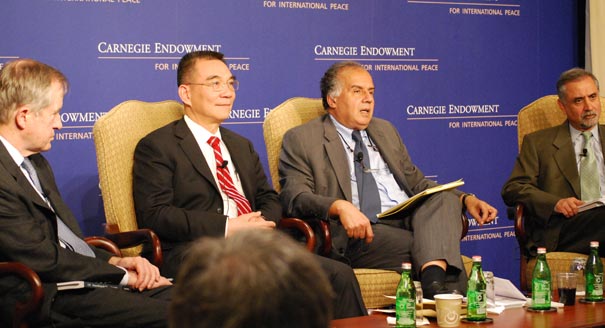
Since opening up to the world in 1979, China’s economy has grown by an astonishing 10 percent, on average, in real terms every year. But many observers have pointed out that China’s recent “rise” is more aptly deemed a “return” to the preeminence it enjoyed before the eighteenth century.
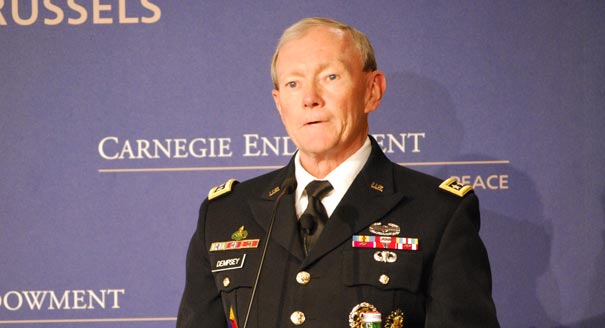
General Martin Dempsey, the 18th Chairman of the Joint Chiefs of Staff, delivered remarks at the Carnegie Endowment for International Peace.
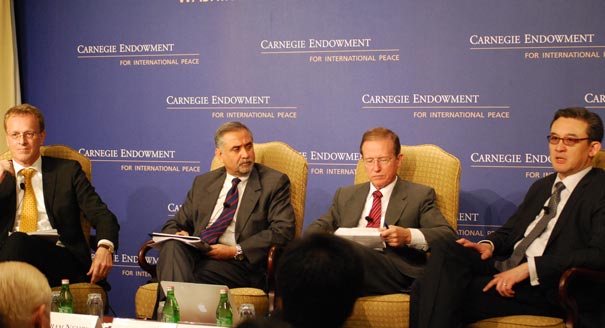
The Philippine economy has grown by about 5 percent a year on average over the last ten years, significantly higher than in the previous two decades. Yet the number of people living below the poverty line has actually increased.
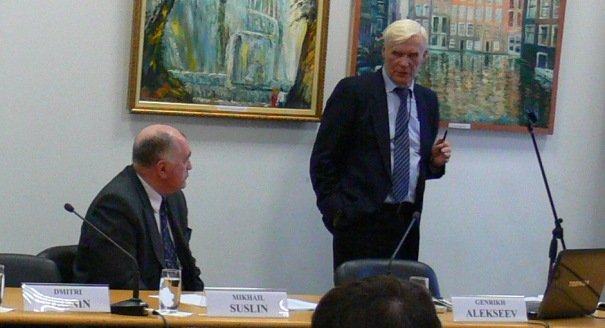
Changes wrought by the consequences of global warming have had a significant influence on economic activity in the Arctic.
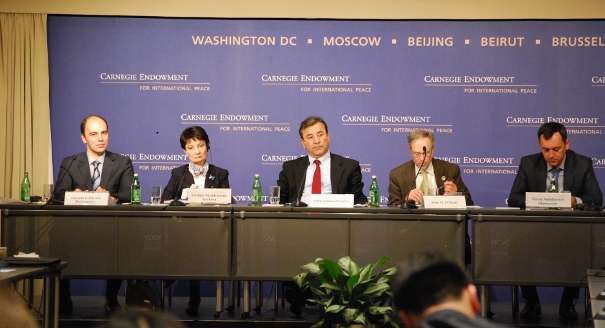
A group of Uzbek parliamentarians, sponsored by the Open World Leadership Center and the National Democratic Institute, discussed current developments in the legislature of Uzbekistan.