Carnegie Moscow Center

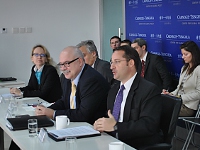
Part of Vladimir Putin’s grand vision for the Russian state includes the formation of a Eurasian Union. Since 2009, his foreign policy strategy has been aimed at attracting foreign investors and integrating the former Soviet states.
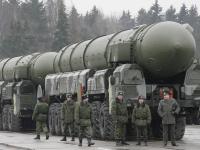
The conference’s second session was devoted to military reform, which began during the perestroika period and is still very much underway today.

The first session examined aspects of interethnic relations and nationalism before and after the Soviet collapse.
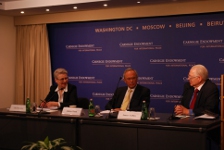
Relations between the West and Russia are still shifting as the West has yet to adjust to the post-Soviet reality and Russia has not settled on its relationship with the rest of the world.
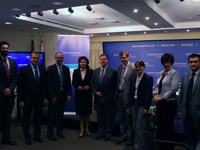
The twentieth anniversary of Ukraine’s independence from the Soviet Union comes at a moment of unique challenge and opportunity for the country, as Ukrainians look to their new leaders to resolve longstanding problems.

The second term of the Indian government led by Prime Minister Manmohan Singh has encountered political turbulence and economic slowdown with no signs of the will to break out of a prolonged stasis at home, but shown a rare strategic purposefulness abroad.
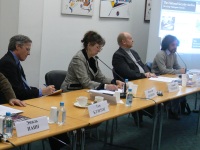
Two issues—military reform and interethnic relations in the Russian Federation—seem to have grabbed the most public attention since the Soviet collapse. They have had a big impact on Russia’s public and political life over the last twenty years, and affect the foundations for the country’s future development.
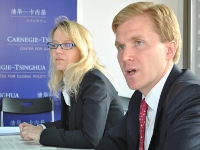
On April 8, 2010, Russia and the United States signed the New Strategic Arms Reduction Treaty (New START), which limits both countries’ deployed strategic warheads and demonstrates U.S. and Russian commitment to Article VI of the Nuclear Nonproliferation Treaty.
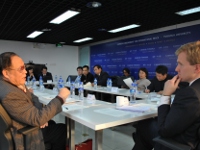
The International Atomic Energy Agency's (IAEA) report’s assemblage of evidence and meticulous sourcing on Iran's nuclear program elicited questions as to whether it would compel countries like China and Russia to undertake a stronger stance.
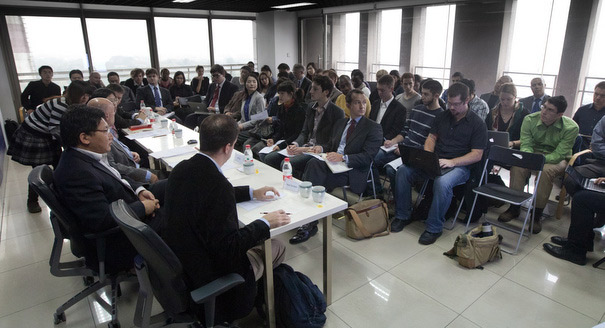
The key facets of the China’s developmental model could be useful for the world’s emerging economies to emulate.