Carnegie Moscow Center


While the United States is an important factor shaping Sino-Indian relations, the role of the United States in relations between China, India, and the countries of Central Asia receives far less attention.

Flanked by China and South Asia, Central Asia serves as the confluence for a number of regional issues with global implications, including energy supply, drug trafficking, and the future of Afghanistan.

Nuclear disarmament faded from media attention after the New START agreement was signed, but it remains a challenge for the world.

The current technology of the missile defense system is not yet entirely reliable and can be fooled by tactics such as employing balloons in space or launching multiple decoy missiles to accompany the actual targeting missile.
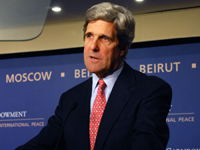
With revolutionary change sweeping through the Middle East and North Africa and violence erupting in Libya, U.S. policy toward the region is quickly evolving.

In 2010, the overall security situation in the North Caucasus was worse than in 2009, although statistics show an improvement in Chechnya and Ingushetia.
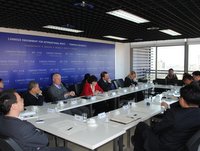
The Strategic and Economic Dialogue should be used by both China and the United States as a medium to facilitate energy and economic cooperation, overcome mounting mistrust that exists in both countries at public and government levels.
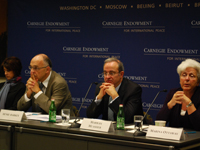
As protesters throughout the region challenge their authoritarian leaders, Iraqis are also standing up and demanding more accountability from their government and an end to the corrupt practices of their politicians.

With China leading the way, most Asian economies are experiencing rapid growth and rising income levels. However, there is a risk of an overheating economy with such a rapid trajectory—as seen in rising inflation rates in many countries.
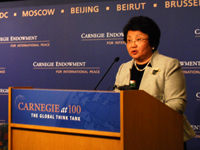
Kyrgyzstan has experienced a year of significant changes and political achievements, including a popular uprising against a president and a move to a parliamentary system of government, and many challenges still lie ahead.