Carnegie Moscow Center

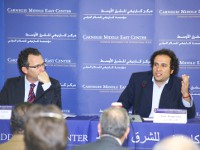
In the wake of Mubarak's fall, Egypt remains in the early stages of a transition that could ultimately lead to real democracy. Significant challenges lie ahead and must be met before instituting a democracy based on good governance and socio-economic reforms.
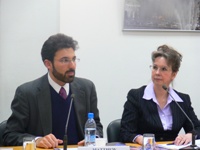
The U.S.-Russia Bilateral Presidential Commission established by Presidents Barack Obama and Dmitry Medvedev opened a new chapter in bilateral relations between the United States and Russia, with a focus on institutions, specific deliverables, and long-term perspective.
As cries for change gain momentum across the region, what is the future of the Saudi state? Will the House of Saud make serious efforts at reform?
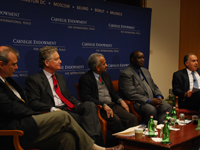
Economic growth in Africa has accelerated remarkably since the turn of the century, reflecting a rise in commodity prices as well as better macroeconomic policies, increased openness, and fewer conflicts.

The choice of Sochi as the host city for the 2014 Winter Olympics has prompted debate over the “Cherkessian issue,” sparking an upsurge in activity and division among Cherkessian public organizations.
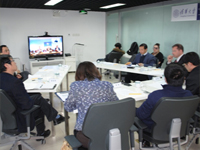
As China continues its rise onto the international scene as both an economic and military power, it is imperative that communication with established multilateral security alliances such as the North Atlantic Treaty Organization (NATO) remain a priority in order to alleviate suspicions and avoid misinterpretations.
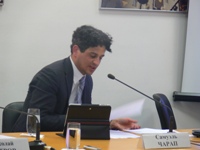
The consequences of the Georgia-Abkhazia, Georgia-South Ossetia, and Georgia-Russia conflicts pose problems for each of the parties involved. There is an obvious need to adopt a plan to strengthen mutual trust and prevent further bloodshed in the region.

While many of the world’s nonproliferation measures concentrate on weapons of mass destruction, the majority of damage and deaths continues to come from conventional weapons.
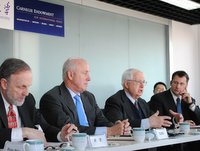
President Hu Jintao’s visit to the United States provides the Chinese leadership with a crucial opportunity to connect with the American public and reach important policy decisions at the highest levels of American and Chinese leadership.

Over the past 40 years, India’s foremost defense strategist K. Subrahmanyam or “Subbu,” as he was fondly known to his friends, profoundly shaped India’s foreign and defense policy through his work and writings.