Carnegie Moscow Center

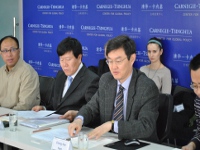
The current global system views multilateralism as the key to fostering new mutually beneficial relationships, improving current international relationships, and promoting peace.
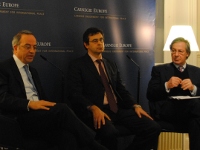
As the Arab world is being engulfed by mass outrage and popular unrest spurred by long-term economic and political frustration, it remains unclear what long-term effects the unrest will have on the region.
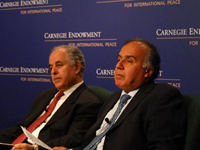
The unrest spreading throughout the Arab world will have significant economic implications for the region.
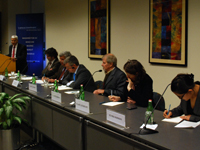
The future of Afghanistan may largely hinge on international efforts to implement viable plans for a transfer of security responsibility, national reconciliation, sustainable socio-economic development, and regional cooperation.
If asset prices and currency values overshoot and inflation surges, there is a risk that emerging markets will be hit with another potentially devastating financial crisis.
Egyptian President Hosni Mubarak has stepped down, handing authority to the Supreme Council of the Armed Forces. What can be expected from the country’s new military rulers and what does this signal for the rest of the Arab world?

Recently, NATO and the European Union have made significant efforts to engage with Russia as an important partner for both France and the wider EU.
As Ukraine continues to reinvent itself both domestically and internationally, the U.S.-Ukraine strategic dialogue remains steady and future-oriented. This bilateral relationship will remain an important factor both in Ukraine’s domestic reforms and in its regional importance.
The unemployment rate in the Arab region is one of the highest in the world and Arab governments need to institute political and socioeconomic reforms in order to counter the negative effects of youth unemployment in their countries.

The IMF and other Western institutions played a marginal role in the Russian default of 1998. However, working with the IMF was instrumental in teaching Russian authorities how to think through problems more comprehensively.