Carnegie Moscow Center

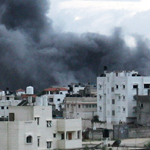
The continuing violence in Gaza between Israel and Hamas is reverberating across the entire region. Carnegie experts in the Middle East and DC explain the various regional perspectives on the conflict, its current impact on neighboring nations, and its possible outcome.
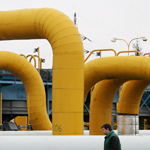
Russia has threatened to cut gas supplies to Ukraine on January 1st if a $2 billion gas debt is not resolved, and both countries stand to lose if they fail to reach a settlement in time. Carnegie experts in Washington and Moscow discuss the implications of the dispute for regional stability, European energy security, and Russia’s relations with the West.

In a special live broadcast of the BBC’s The World Tonight program, Carnegie experts assessed the foreign policy priorities facing President-elect Barack Obama. The wide-ranging discussion focused on issues from Iraq, climate change, and the Middle East peace process, to Russia and Iran.
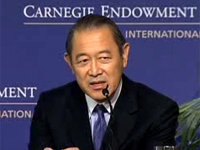
Although China has captured the world's attention because of its impressive growth rates, its economy remains smaller than Japan's. Some analysts argue that the United States has engaged China at the expense of disengaging from Japan. Japanese Ambassador to the United States, Ichiro Fujisaki, offer a perspective on Japan's role in Asia.
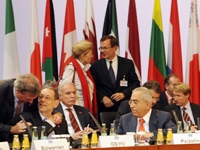
European priorities for Middle East policy include greater engagement with the Arab-Israeli peace process and with Iran. The advent of a new U.S. administration and greater diplomatic engagement by Arab states offer the hope of new approaches and possibilities for cooperation.

Three years since the Tulip Revolution much of the support for the current Kyrgyz government has faded. The Kyrgyz opposition that once struggled to bring about this revolution now argues that simply changing the leaders will not produce the needed reforms. Instead, the opposition contends that a new political system, one that checks the power of the majority party, must be implemented.
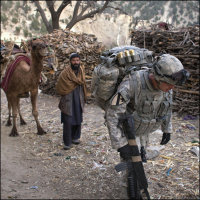
At a roundtable in Paris, experts discussed the future of strategy in Afghanistan, asking whether security or development should be prioritised first.

The Mumbai attacks demonstrate that terrorism demands a global response. The best way to address militant groups operating outside Pakistani state control is to promote stable democracy and increased state capacity so the government can dismantle the infrastructure of terrorism in under-governed parts of the country – a project in which both India and the international community have a stake.
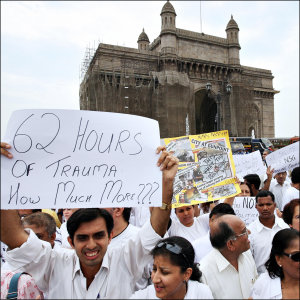
Preventing an Indian-Pakistani war, investigating the LeT, and Indian law and order in the aftermath of the Mumbai attacks, with Ashley J. Tellis.
Carnegie Beijing sponsored and co-hosted a policy debate with the Institute of Asia-Pacific Studies, Chinese Academy of Social Sciences, and the Center for Regional Security Studies to address the current internal and external challenges ASEAN countries face and the ASEAN Charter’s implications for alleviating some of these problems and improving regional relations.