Carnegie Moscow Center

The situation in the Middle East is set to deteriorate. The European policy community assessed past European action in the region, lessons learnt, and a future strategy.

U.S. Ambassador to NATO on the development of a grand transatlantic strategy to Afghanistan, with a comprehensive approach to reconstruction and security in the region as a whole.
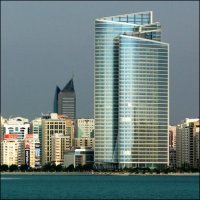
Europe-wide discussions on the emerging Gulf economies, domestic political reform, sovereign wealth funds and the potential of Gulf investment to contribute to a solution for the financial crisis.
The bombings of the U.S. embassy in Sana’a this past September points to possibilities of an increased presence of Al-Qaeda in Yemen. Understanding the context in which Jihadi groups emerge, the role of apolitical Salafi groups in the broader Salafism debate, and Saudi Arabia's role in defining the global Salafi movement is vital for the creation of proper policy responses in the region.
Young Russian novelists are today reengaging with the classic Russian debate between apathy and action. Their tendency to create passive protagonists serves as a metaphor for citizens' general sense of powerlessness and malaise toward the current government.
Although it is South Ossetia and Abkhazia that have been receiving most of the world’s attention this fall, Russia’s own north Caucasus region should not be ignored. In fact, Carnegie’s Alexey Malashenko predicts that this area of Russia is likely to experience serious turbulence in the coming year.
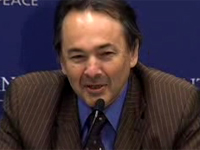
Iraq and Afghanistan are the main battle grounds for the clash of two great narratives: the Global War on Terror narrative, and the Jihad through Martyrdom narrative. Not only does the failure of those two narratives pose new challenges to the Obama administration, but it also brings to light Europe’s role in today’s discussion on democratization.
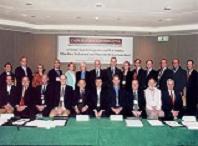
The China Program of the Carnegie Endowment for International Peace co-sponsored the International Conference on PLA Affairs, held in Taipei, Taiwan from November 20th to November 22nd.
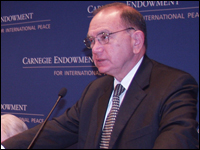
The real struggle of ideas in the Arab and Muslim world today is between moderate and extremist forces. As the majority of people remain undecided and nonaligned with either camp, the Obama administration must adopt policies that are geared toward strengthening the moderates and weakening the extremists.
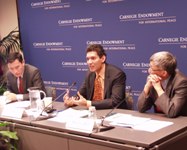
A close examination of China's economic reform policies in the 1980s and 1990s reveals differences that shed light on motivations for its $586 billion stimulus plan.