Carnegie Moscow Center

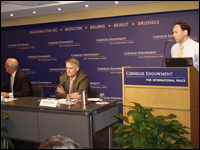
With the Beijing Olympics only days away and the Chinese economy continuing its robust expansion, the Chinese people are increasingly optimistic about China’s future and confident about its global image. That is the major finding from Pew’s 2008 Global Attitudes Survey.
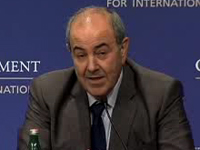
Dr. Ayad Allawi, Former Prime Minister of Iraq and current member of the parliament held a discussion on Iraqi politics in which he stressed the importance of reconciliation, including reaching an agreement on Iraqi refugees, the internally displaced, and the disarmament of militias.

The authors of a new policy report from the Working Group on Development and the Environment discussed the impacts of agricultural trade liberalization on sustainable development in Latin America.
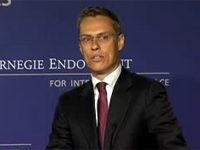
Finnish Minister for Foreign Affairs, Alexander Stubb, discusses the prospects and challenges of the EU becoming a superpower in the international arena.

The chair of an American Political Science Association task force discussed the implications of global inequality for developing countries.
France assumed the presidency of the European Union earlier this month as Europe tries to move forward after Ireland’s rejection of the Lisbon Treaty. To better understand where the EU is today and French leadership objectives, the Carnegie Endowment hosted French Ambassador to the United States Pierre Vimont for an in-depth discussion on the future of the EU.
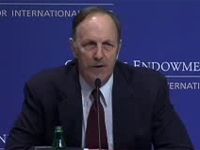
China’s economic size will match that of the U.S. by 2035 and double it in total GDP by midcentury, concluded Albert Keidel during a panel discussion with leading experts on China’s economy and military. Participants discussed the success and substantiality of China’s economic rise and addressed the U.S. and global implications of China’s long-term economic growth.
The next U.S. administration needs a clear strategic vision for Asia befitting the region’s status as the new global center of gravity. That will require steps that include continuing the Strategic Economic Dialogue and avoiding coalitions based on democracy and common values.
On June 24, 2008, the Carnegie Endowment hosted a discussion on EU and U.S free trade agreements (FTAs) in the Middle East with Riad al Khouri, a visiting scholar at the Carnegie Middle East Center. While Europe has historically been active in negotiating FTAs in the Middle East, U.S. FTAs in the region have primarily been motivated by strategic concerns rather than economic impacts.
The authors of a new policy report discussed the impact of foriegn investment on sustainable development in Latin America.