Carnegie Moscow Center

A recent IMF staff report on Japan finds some progress for so-called Abenomics, but says that progress is uneven and substantial medium-term risks remain. The success or failure of the policies have important implications for both Japan and the region.
The current conflict between the European Union and Russia is a clash between a postmodern world, in which states prefer to use soft power to achieve their foreign policy goals, and a modern one, in which the use of force in foreign policy is considered acceptable.
Over the past four decades, an influential group of economists have pioneered a new school of thinking, known as new institutional economics, focused on the role of institutions in economic development.
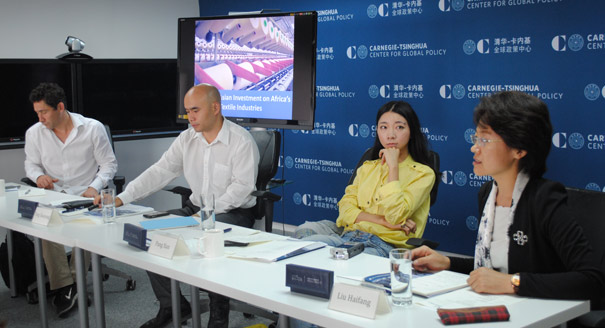
The investment of Asian firms in Africa’s cotton, textile, and apparel sectors could be both a boon and a hindrance for Africa’s own internal production.
The Carnegie Middle East Center hosted young scholars from the School of Global Affairs and Public Policy at the American University in Cairo for a one day workshop that introduced them to writing and working for think tanks and the differences between policy and academic writing.
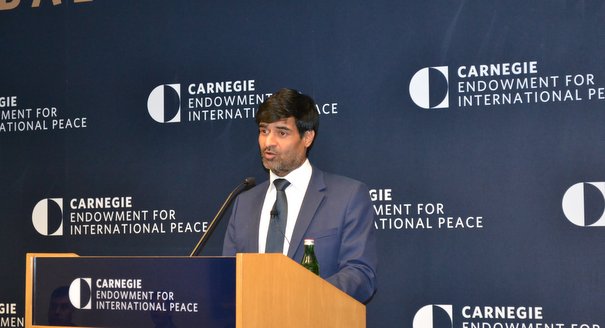
While Prime Minister Modi has been able to instil a certain energy and purpose in Delhi, some key domestic imperatives and his own personal preferences are beginning to define India’s global play.
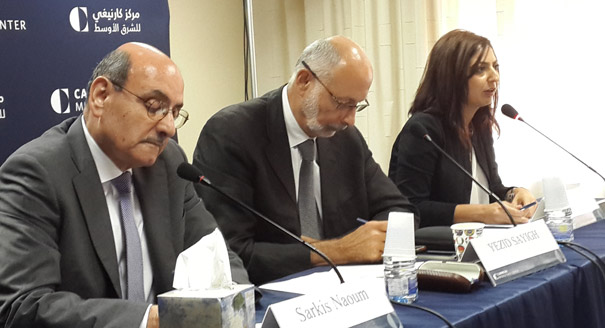
Following the U.S. announcement of a strategy against the Islamic State, the Carnegie Middle East Center held a talk to analyze the direction of American foreign policy and the creation of an international coalition to tackle the Syrian-Iraqi crisis.
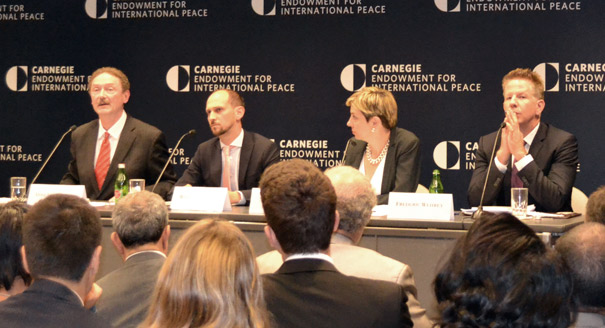
Nearly three years after the fall of Muammar Gaddafi, Libya is in the throes of a bitter civil war. Its political and security institutions are split along complex fault lines that defy easy categorization.
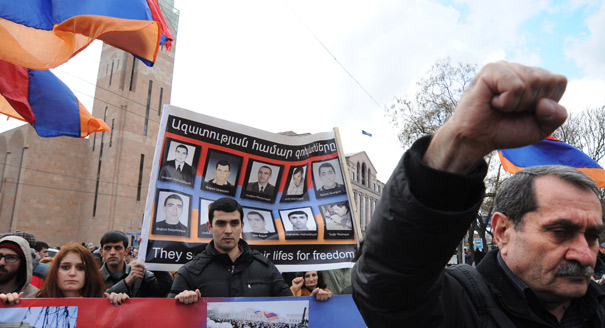
Armenia has not been immune to the recent turmoil affecting the post-Soviet space and this summer saw the worst flare-up on the Line of Contact between Armenian and Azerbaijani forces since 1994.

Policymakers face many roadblocks in their pursuit to implement policies that reduce violence and improve rule of law, including a lack of time to review the available expertise.