Carnegie Moscow Center


The conflicts in the Caucasus are often directly linked to changes in territorial borders. Creating an atlas of the Caucasus is a key to understanding the nature of the conflicts in the region.
A year after President Obama outlined an agenda of nuclear disarmament, nonproliferation, and counterterrorism in his speech in Prague, the administration has moved forward with its release of a new Nuclear Posture Review and agreed to a new Strategic Arms Reduction Treaty.

The signing of the new START treaty is the most tangible result of the U.S.-Russian relations reset to date. More important than the treaty itself, however, are the opportunities that it opens up for closer cooperation in other areas.
Nuclear weapons are again at the forefront of U.S.-Russian relations. The new Strategic Arms Reduction Treaty (START) agreement has been signed, but its ratification still faces opposition in both Russia and the United States.

The financial crisis, climate change, political and social instability, and persistent inequality have worsened the odds that Africa—and others in the developing world—will meet the Millennium Development Goals.
In May 2010, nearly 190 nations will meet in New York to assess the implementation of the Nuclear Non-Proliferation Treaty (NPT) and to chart a path forward for progress on its three pillars: nonproliferation, disarmament and peaceful uses of nuclear energy.
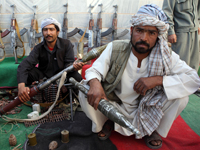
The recent London Conference on Afghanistan has revived debate on negotiations and reconciliation with the Taliban. Optimistic assessments of the Marjah operations, as well as pessimistic evaluations of the Afghan state, have both been used as arguments in favor of talking to the Taliban.
Russia is already doing much to help the alliance in its struggle against the Taliban insurgency, yet there is a growing feeling in the West that Moscow could be playing a more decisive role in Afghanistan.

On March 7th, Iraqis went to the polls to vote in their second free parliamentary elections. The subsequent government formation process will have implications on the stability of Iraq and the U.S. effort to withdraw combat forces.
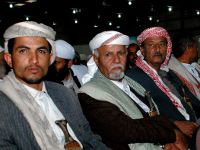
Since Yemen became a policy priority three months ago, there has been much discussion about the emergence of under-governed spaces in the country as host for Al-Qaeda. It is critical to understand how these alternatively governed areas function, deal with conflict, and how traditional methods of conflict resolution work.